


KORG Phase8 Acoustic Synthesizer: Eight-Voice Breakthrough
Explore the KORG Phase8 acoustic synthesizer, an eight-voice instrument blending electromechanical resonators with digital control for bold textures.
The KORG Phase8 Acoustic Synthesizer
The KORG Phase8 acoustic synthesizer arrives as an experimental electromechanical instrument from KORG Berlin. It blends eight independent voices with sequenced steel resonators for vibrant, mechanical sound textures. As a result, it reshapes expectations for acoustic synthesis.
Developed at KORG Berlin’s skunkworks R&D, the Phase8 started life as a lab prototype. However, it has moved beyond the lab and is now available for sale to the public. This electromechanical 8-voice instrument invites musicians and designers to explore new timbres and performance techniques. Because it uses sequenced steel resonators, it generates percussive, evolving tones unlike typical electronic synths.
Musicians will notice a tactile, lab-to-wild transition in how the Phase8 responds to gestures. Furthermore, KORG Berlin positions this product for sale as both a performance instrument and a sound design platform. Early adopters and experimentalists will likely drive creative uses and new genres. Read on to learn how the Phase8 works and what it means for the future of acoustic synthesizers.
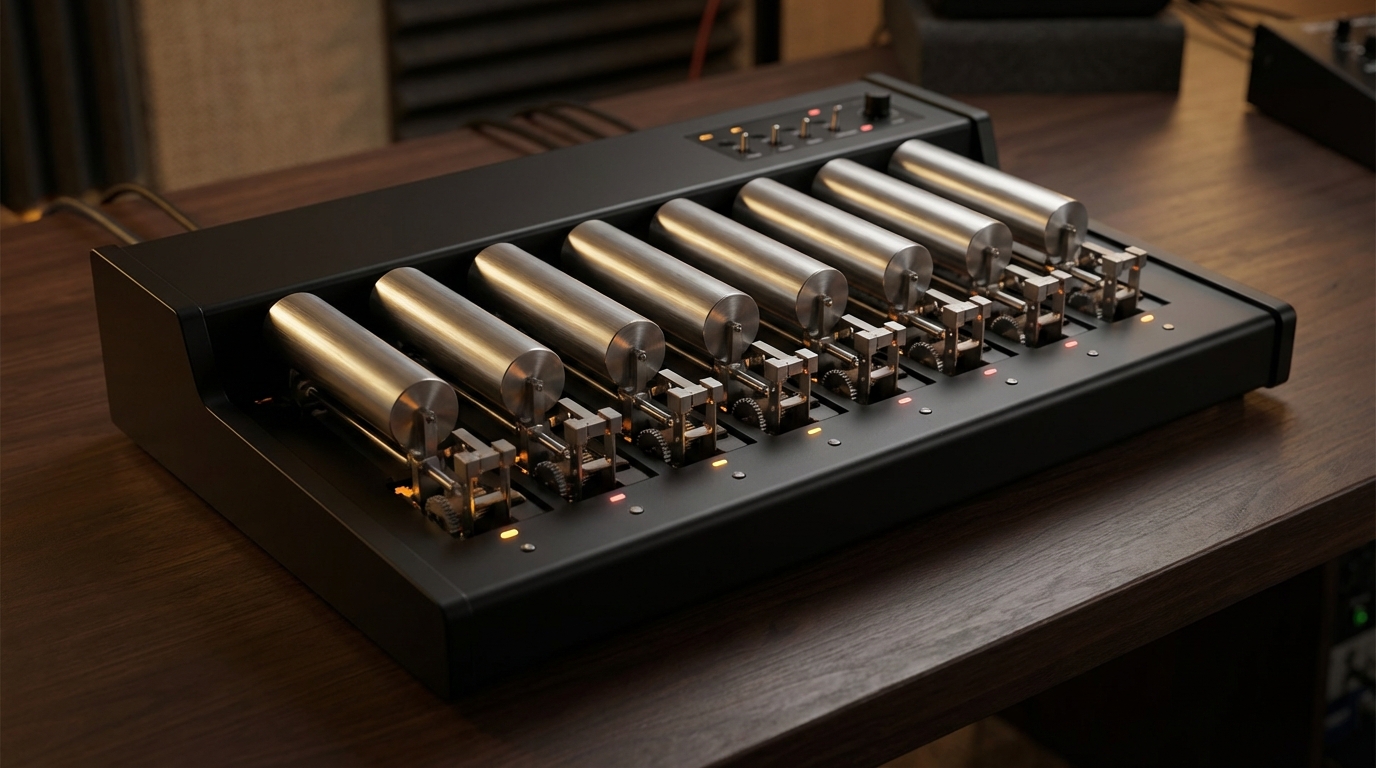
Electromechanical design of the KORG Phase8 acoustic synthesizer
The KORG Phase8 acoustic synthesizer combines mechanical parts with modern electronic control. KORG Berlin developed the chassis to house precise actuators and tuned steel resonators. Each actuator strikes or excites a resonator under program control, so the instrument produces organic, percussive tones. Because the design uses physical vibration, the sound contains complex overtones and natural decay. As a result, the Phase8 sits between a traditional acoustic instrument and a digital synthesizer.
Sequenced steel resonators in the KORG Phase8 acoustic synthesizer
Sequenced steel resonators form the core sound source. Each of the eight resonators comprises a steel element tuned to a pitch. The instrument sequences which resonators the actuators excite, and therefore creates rhythmic and harmonic patterns. In addition, users can shape envelopes, add modulation, and route effects to change the resonators’ response. For demonstrations and specs, see the official product page at the official product page and coverage from CDM at CDM’s coverage.
8-voice capability of the KORG Phase8 acoustic synthesizer
The Phase8 offers true eight-voice polyphony. That means each voice controls an independent resonator and actuator pair. Consequently, you can play chords, layered textures, and interlocking rhythms without voice stealing. Moreover, the built-in sequencer supports polymetric patterns, so voices can run different step lengths. This fosters evolving, generative textures useful for sound design and live performance. Synthtopia also covered the Phase8 debut at Synthtopia’s coverage.
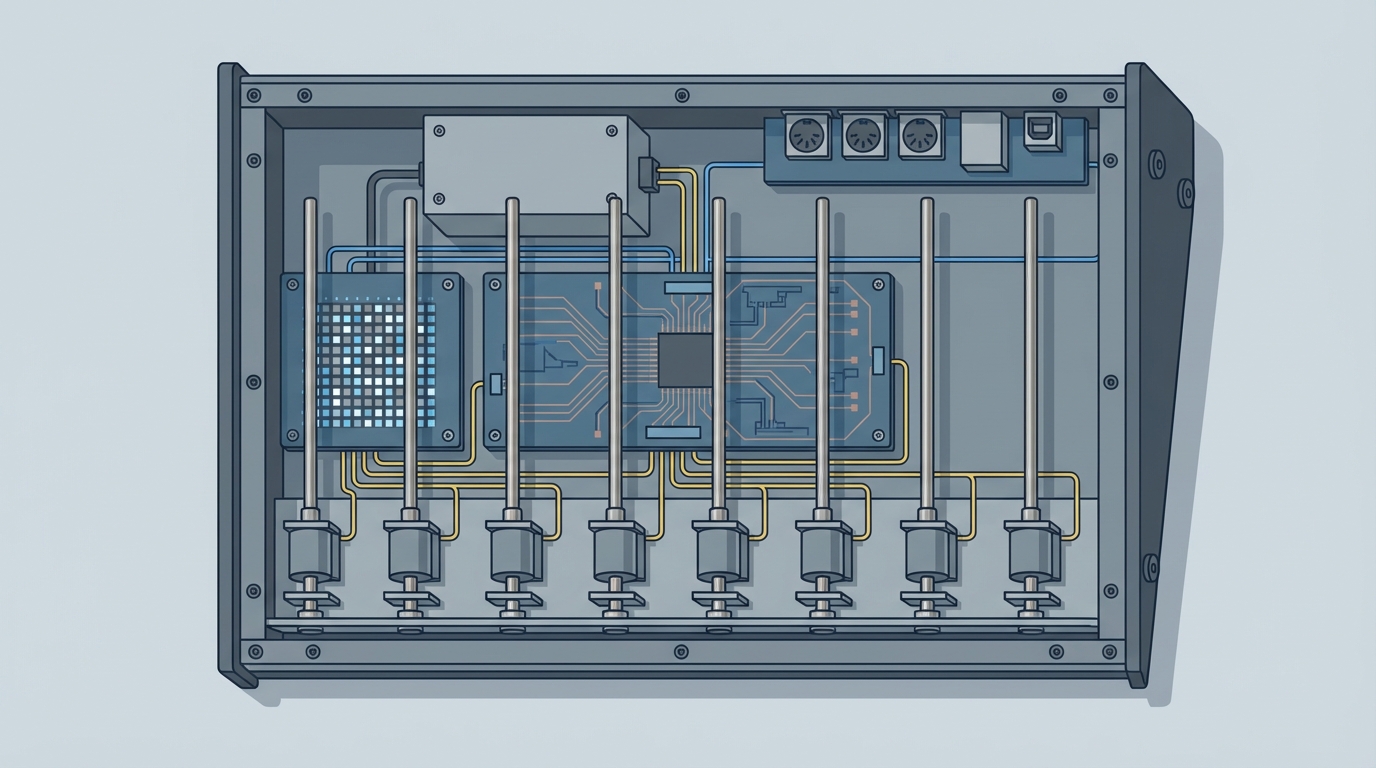
Control and integration remain practical because KORG included MIDI and USB connections. Therefore, the Phase8 fits studio racks and modular setups. Finally, its electromechanical approach expands the palette of acoustic synthesizers, offering new timbres for experimental musicians and sound designers.
KORG Phase8 acoustic synthesizer origins at KORG Berlin R&D skunkworks
KORG Berlin incubated the Phase8 inside a compact skunkworks R&D environment. Engineers and sound designers worked side by side on prototypes. Because the lab favored rapid iteration, teams built many mechanical and electronic prototypes quickly. As a result, the project evolved from a proof of concept into a manufacturable instrument.
The development process mixed traditional instrument craft with systems engineering. Designers tuned steel resonators by hand, while developers wrote firmware for sequence and voice management. In addition, mechanical engineers optimized actuators for repeatable strikes and low noise. Therefore, the final design balances acoustic richness with electronic control.
KORG Berlin’s innovation culture supported cross-disciplinary exploration. Team members tested generative algorithms and live performance patches in the same sessions. However, they kept focus on durability and user needs, so the lab-to-wild transition stayed practical. The move from lab prototype to product included extended field testing and user feedback loops.
The R&D skunkworks model sped decision making and reduced bureaucracy. It also let the team integrate novel features like polymetric sequencing for eight voices. Moreover, KORG documented performance data and stress-tested components before scaling production. For early coverage and hands-on impressions, see the official product page at KORG Phase8 Product Page and CDM’s report on KORG’s Phase8.
Ultimately, the Phase8 reflects experimental electromechanical thinking made robust. It is an electromechanical acoustic synthesizer designed for real stages and studios. Consequently, the lab-to-wild transition points to a new era in instrument R&D.
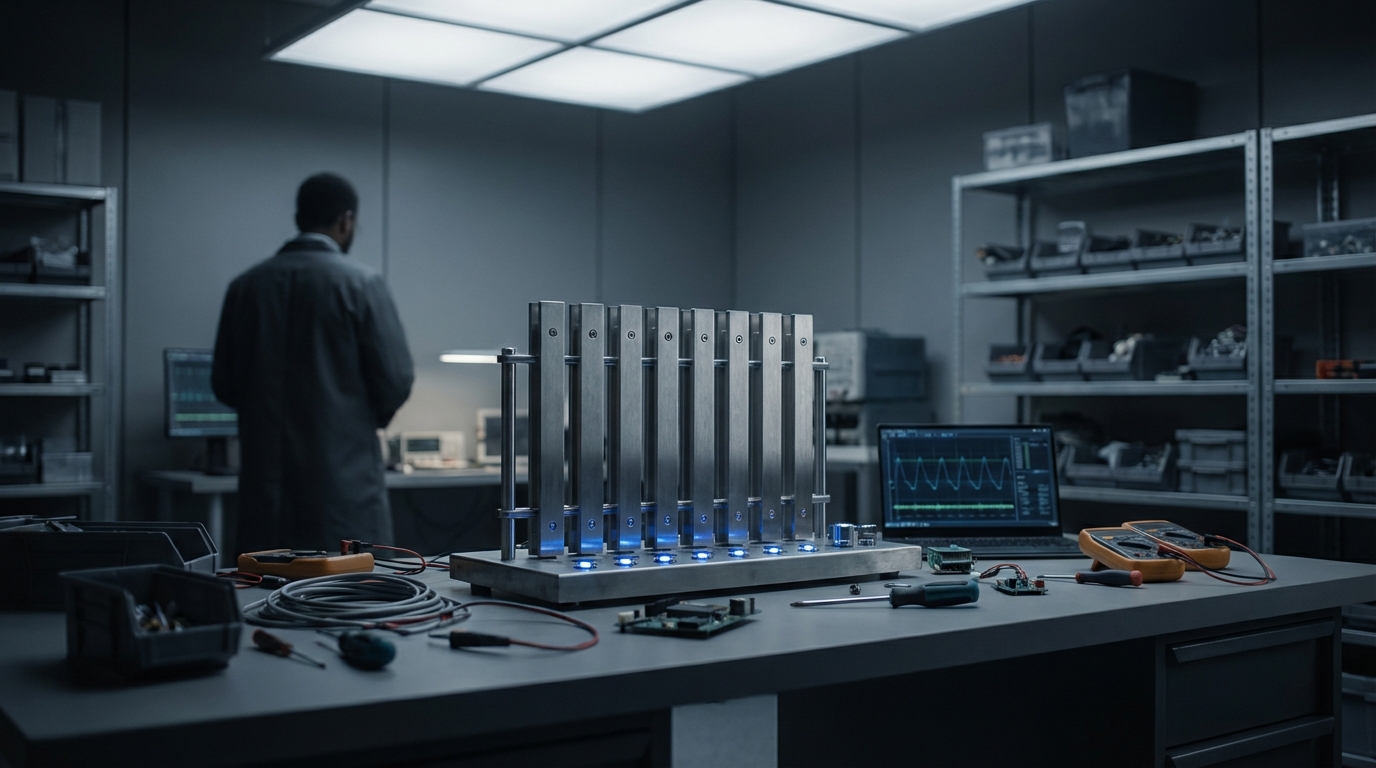
Concepts refined in KORG Berlin’s skunkworks lab captured during prototype development for the KORG Phase8.
The KORG Phase8 acoustic synthesizer marks a new chapter in instrument design. It blends electromechanical engineering with musical performance in bold ways. Because it pairs sequenced steel resonators with an eight voice architecture, it offers sounds that feel both organic and otherworldly.
Musicians gain tactile control over evolving timbres and rhythmic motion, so compositions can become more textural and interactive. Moreover, sound designers will find fresh material for sampling and hybrid patching. As a result, electronic music culture may shift toward instruments that fuse mechanical behavior with digital control.
KORG Berlin’s lab to market move shows how skunkworks R&D can change creative tools. Ultimately, the Phase8 invites players to redefine performance and sound, and it points toward new directions in music making.
