


NAMM 2026 gear: which releases define the year?
Explore NAMM 2026 gear highlights, from Dog Paw and Casio SX-C1 to Leviasynth and beyond in this hands-on recap.
NAMM 2026 gear felt like a scatter of clever sparks rather than one giant blaze. The show offered no single showstopping product, but it brimmed with interesting innovations. From compact synths to experimental samplers and hands-on controllers, the floor buzzed with ideas. As a result, insiders and hobbyists left inspired and busy with notes.
Highlights included hybrid voices, MPE grids, electromagnetic experimenters, and powerful standalone workstations. For example, compact samplers packed 64GB and fast USB-C workflows, while new grid controllers mapped fret-like layouts for expressive play. However, many brands preferred quiet previews or NDA demos instead of splashy reveals. That made the week feel like a treasure hunt rather than a single headline.
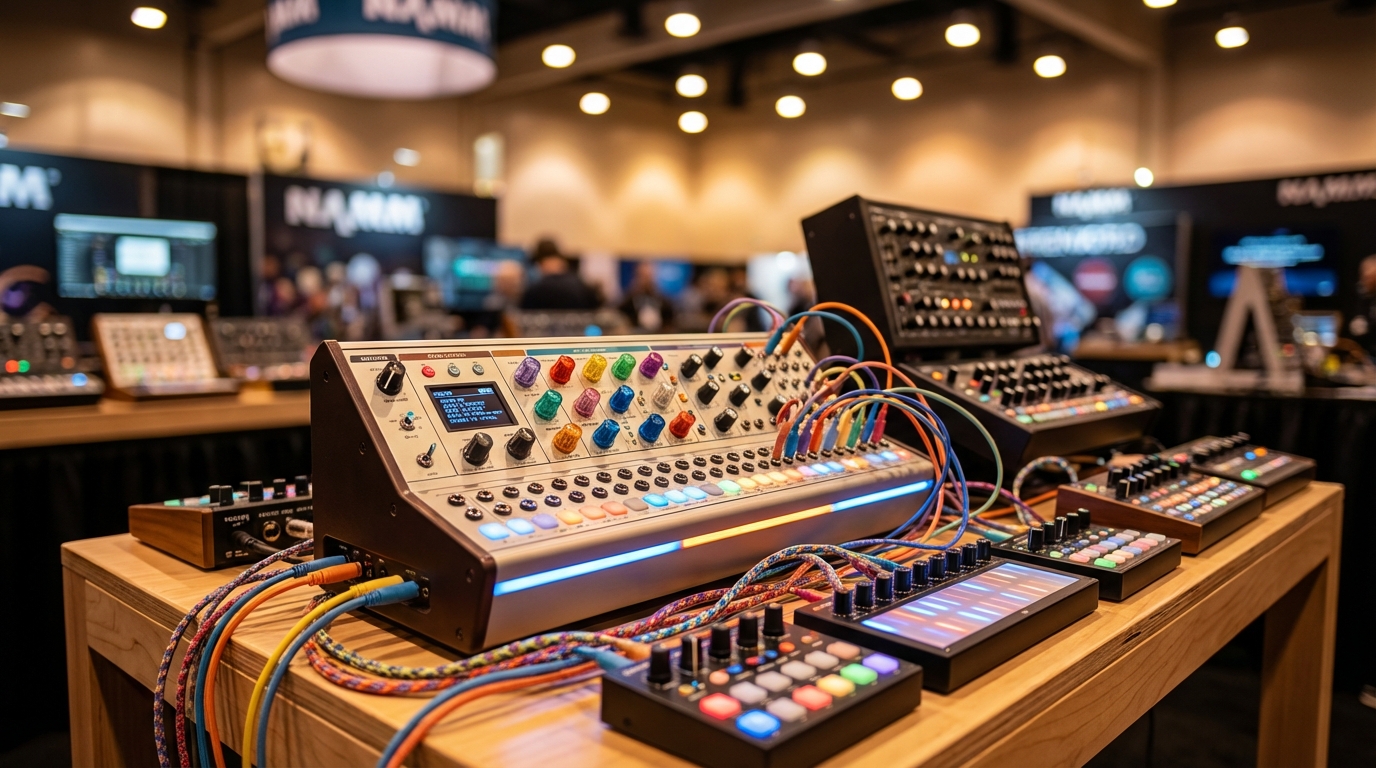
Picture a bustling exhibition floor, multiple gear booths and diverse electronic music instruments on display. Designers demo synths, samplers, and controllers to curious musicians.
Read on to see the coolest synths, software, and hands-on gear I found. I focus on playable innovation, pricing teasers, and practical impressions. Because the market felt experimental, expect surprises in small form factors.
Key synth and gear highlights: Dog Paw and Casio SX-C1
The NAMM 2026 gear lineup rewarded close listening and hands-on time. Below are two standouts that felt fresh and playable. Each blends modern workflows with tactile design. Read the specs, quick impressions, and why they matter for producers and live players.
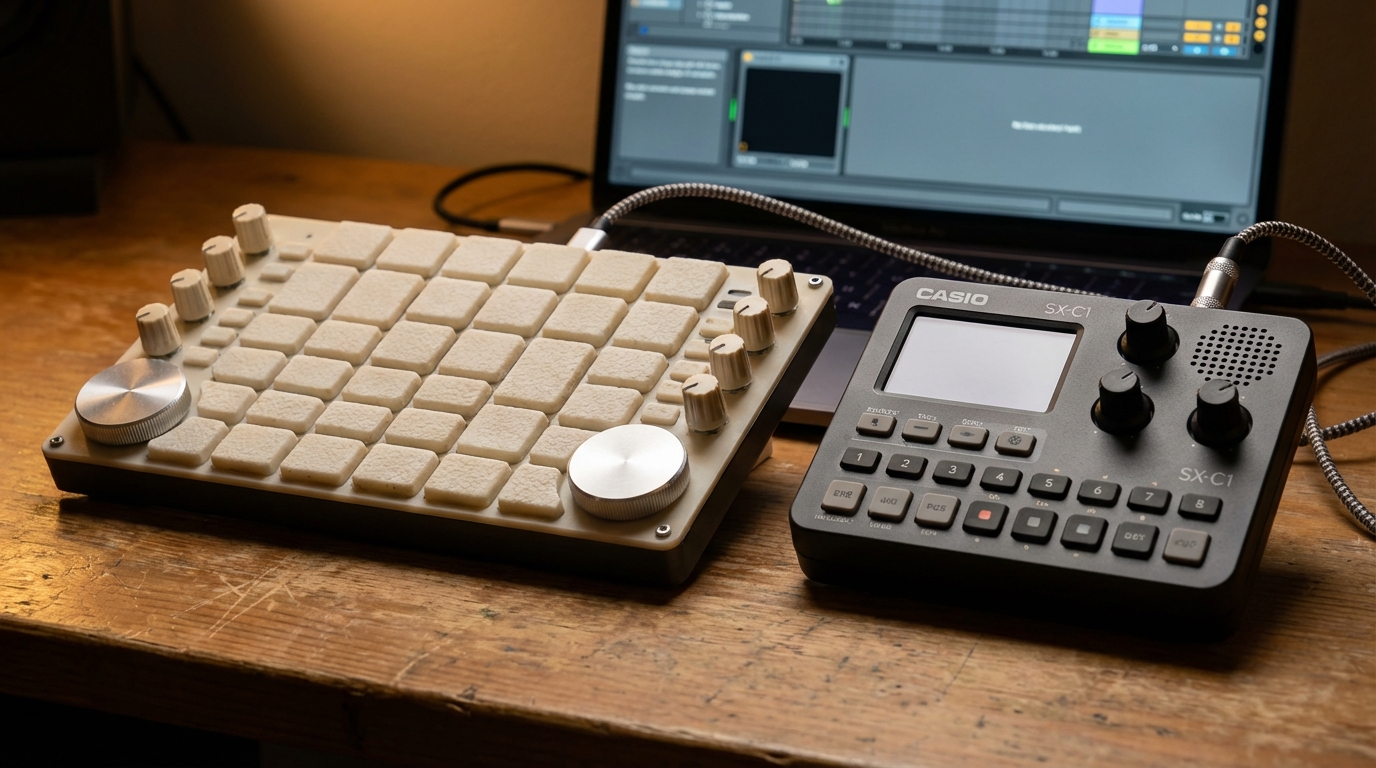
Dog Paw 64-pad MPE grid controller
A focused MPE controller that maps pads like guitar frets. It aims for expressive playing rather than traditional keyboard layouts. As one demo summed up, “no wrong notes.” That ethos shows in the interface and community features.
Key specs and features
- 64 rubberized pads in an 8 by 8 layout for MPE expressivity
- Community-made layouts you can load and edit for alternate mappings
- Tight DAW integration with preset mappings and low-latency MIDI over USB
- Designed to map to guitar frets for intuitive pitch bends and slides
- Kickstarter-backed project; pre-orders open, shipping dates pending
Quick take
The pads feel unique, and many players noted the tactile response. “It’s fun to play, although the pads have a different feeling than what you might expect — almost like a typewriter.” Because of that personality, Dog Paw encourages experimentation.
Casio SX-C1 handheld sampler
Casio returned to sampling with a compact device that focuses on immediacy. The SX-C1 recorded clear 16-bit/48kHz WAV files in the NAMM demos. As a result, it suits quick ideas and live sampling.
Key specs and features
- 16-bit 48kHz WAV recording via mic, line in, or USB-C
- 64GB internal storage with fast USB-C file transfer
- 16 trigger pads and 16-voice polyphony for layered playback
- Trimming wheels and scratch-style effects shown in demo
- Power via USB-C or four AAA batteries; battery life roughly two hours
Quick take
The SX-C1 blends retro charm with modern convenience. It is handy for sketching beats, sampling field recordings, or live jamming. For further reading on NAMM coverage, see MusicTech and Synthtopia for hands-on notes and demos.
ASM Leviasynth: NAMM 2026 gear highlight
ASM’s Leviasynth stole many ears at NAMM 2026 gear coverage. It blends digital algorithmic engines with analog-style warmth. As a result, it sounded both futuristic and playable.
The Leviasynth is a 16-voice hybrid synthesizer. It uses eight oscillators per voice driven by an algorithmic engine. Therefore it can produce dense, evolving textures and tight polyphonic pads. Both desktop and keyboard versions support MPE for expressive control.
Key technical specifics
- Voice architecture: 16 voices hybrid synthesis
- Oscillators: up to eight oscillators per voice with algorithmic routing
- MPE: full MPE support for per-note expression
- Desktop version: compact module with 16 velocity pads for performance
- Keyboard version: 61-key with polyphonic aftertouch and full keyboard control
- Effects and modulation: extensive routing and multilayer effects engine
- CV and connectivity: USB, MIDI, and modular-friendly I O for integration
- Pricing: desktop $1,799, keyboard $2,499 (street prices and availability may vary)
Why it mattered
The Leviasynth felt like a thoughtful reinvention. It offers modern sound design without sacrificing hands-on play. As a result, many attendees were excited to explore its algorithmic textures. One NAMM comment captured ASM’s intent: “It would have been easy for them to continue making analogue synths, but they wanted to do something different.”

Other noteworthy NAMM 2026 gear: Demon Box, Akai MPC XL and Korg Phase8
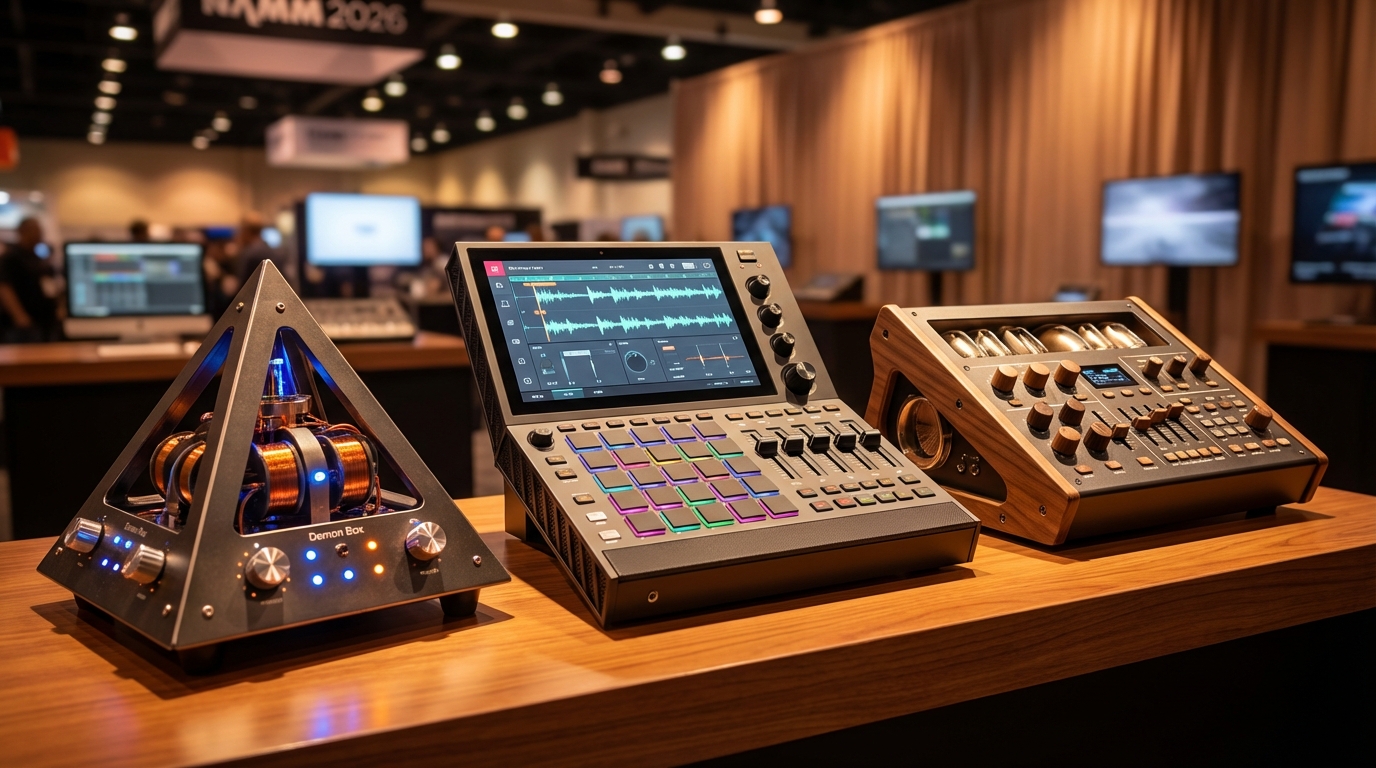
NAMM 2026 gear also showcased wild experimental ideas and powerful workstations. Below are three eye-catching products that grabbed attention on the show floor. Each one pushed a different direction in sound and performance.
Demon Box electromagnetic field synthesizer
Eternal Research’s Demon Box turns electromagnetic fields into sound. As a result, it produced semi-random textures and reactive patterns in demos. The device generated roughly 15 semi-random notes per second when paired with a software voice. It also linked to Black Corporation’s ISE-NIN for expanded tonal options.
Key points
- Synthesis method: electromagnetic field synthesis using arrays of inductors
- Output behavior: semi-random, self-generating musical patterns
- Connectivity: audio outputs plus MIDI integration when paired with external synths
- Use case: sound design, live performance, audio-visual installations
For hands-on coverage and background, see the Demon Box preview at Synthtopia: View Docs
Akai MPC XL standalone workstation
Akai’s MPC XL aims to be the most powerful MPC ever. It packed a Gen 2 eight-core processor and 16GB of RAM. Therefore, it could run many plugins and large projects on device.
Quick specs
- CPU: Gen 2 eight-core processor
- Memory: 16GB RAM
- Performance: supports up to 32 plugin instruments, 16 audio tracks, and 256 voices
- Display and layout: 10.1-inch multi-gesture touchscreen and 4 by 4 pads
For the announcement and details, read the ProSoundWeb report: View Docs
Korg Phase8 acoustic synthesizer
Korg’s Phase8 blended acoustic resonance with synth control. The instrument uses eight electromechanical voices that drive resonators. In the NAMM demo, presenters modulated sound using rocks, wooden blocks, and magnets. As a result, it felt tactile and unpredictable.
Highlights
- Voices: eight independent electromechanical resonators
- Controls: AIR slider for resonator depth and expressive physical interaction
- Connectivity: MIDI TRS-A, USB-C, sync I O, and audio outputs
Learn more on the official Korg Phase8 page: View Docs
Fender, Motion controllers and secret NDA previews at NAMM 2026 gear
Fender Studio Pro and Motion controllers
Fender used NAMM 2026 gear to push a connected workflow. The company rolled out Fender Studio Pro, a DAW aimed at guitarists and producers. It comes as a perpetual license and ties into Fender hardware. Motion controllers shipped alongside the DAW. They are compact, DAW‑friendly controllers that work with any major DAW. Pricing sat in the midrange, roughly three hundred to four hundred dollars. As a result, Fender targeted creators who want hands-on control without complex setups. For official details on Fender’s DAW announcement, see the PR Newswire release: View Docs.
Secret NDA booths and the industry direction
Many brands preferred quiet previews inside NDA booths. Therefore, much of the show felt like a tease. Several demos hinted at AI integrations and modern workflow tools. Some companies showed prototypes behind drapes, while others ran invite-only demos. As a result, we saw fewer marquee reveals and more incremental innovation. This points to a market that explores software, AI, and hybrid hardware before public launches.

Conclusion
NAMM 2026 gear delivered a wide, stimulating snapshot of music tech. The show lacked one blockbuster product, yet it offered many small innovations that together felt significant. Hybrid synths and algorithmic engines like the Leviasynth hinted at new sonic directions. MPE controllers such as Dog Paw expanded expressive performance options. Meanwhile compact samplers like Casio SX-C1 brought practical live sampling to the forefront.
Designers pushed boundaries across form factors. Electromagnetic experiments such as Demon Box and powerful standalone workstations like the Akai MPC XL showed technical ambition. Korg’s Phase8 blended acoustic resonance with synthesis in unexpected ways. As a result, the floor favoured creative risk over safe, incremental updates.
For performers and producers, the key takeaway is diversity. You can now combine MPE expression, hybrid oscillators, novel synthesis, and integrated workflows. Therefore expect more patchable, playable gear to appear in studios and stages. Moreover, the NDAs and private demos hinted at AI and software-led features arriving soon.
We will follow up with detailed reviews as products ship and firms release firmware. Those future articles will test sound, stability, and workflow in depth. Until then, NAMM 2026 felt like a field guide to where electronic music tools will wander next. Stay tuned for reviews and practical tests that show how this gear will reshape DJ and electronic music culture.
