


Richie Hawtin Plastikman gear shapes techno history
Richie Hawtin Plastikman gear reshaped techno with acid basslines, classic Roland gear, and hybrid live setups.
Richie Hawtin Plastikman gear defined a generation of minimalist techno and set a new standard for performance rigs. Hawtin rose from Windsor and linked to Detroit pioneers. He reinvented hardware use through acid basslines and drum machine mastery. Under the Plastikman alias he turned TB303 squelch and TR808 percussion into immersive, hypnotic textures. Today his setups blend DE9 series hardware, modular Eurorack modules, drum machines, and mapped controllers with Ableton Live.
Because he develops tools like PLAYdifferently Model 1 mixer, producers and DJs gain surgical control and pristine analog path. The result is a hybrid approach that treats DJing as live remixing. For gearheads this story matters because it maps lineage to modern workflows. Moreover, Hawtin’s emphasis on transparency and tonal control influenced both instrument design and plugin development. As a result, collectors and working producers chase the same clarity found in Plastikman sets.
This introduction previews technical deep dives on the TB303, TR909 timing and Model 1 signal path. It also covers live mapping strategies to follow.
Early Influences: Richie Hawtin Plastikman gear and the Birth of Acid Techno
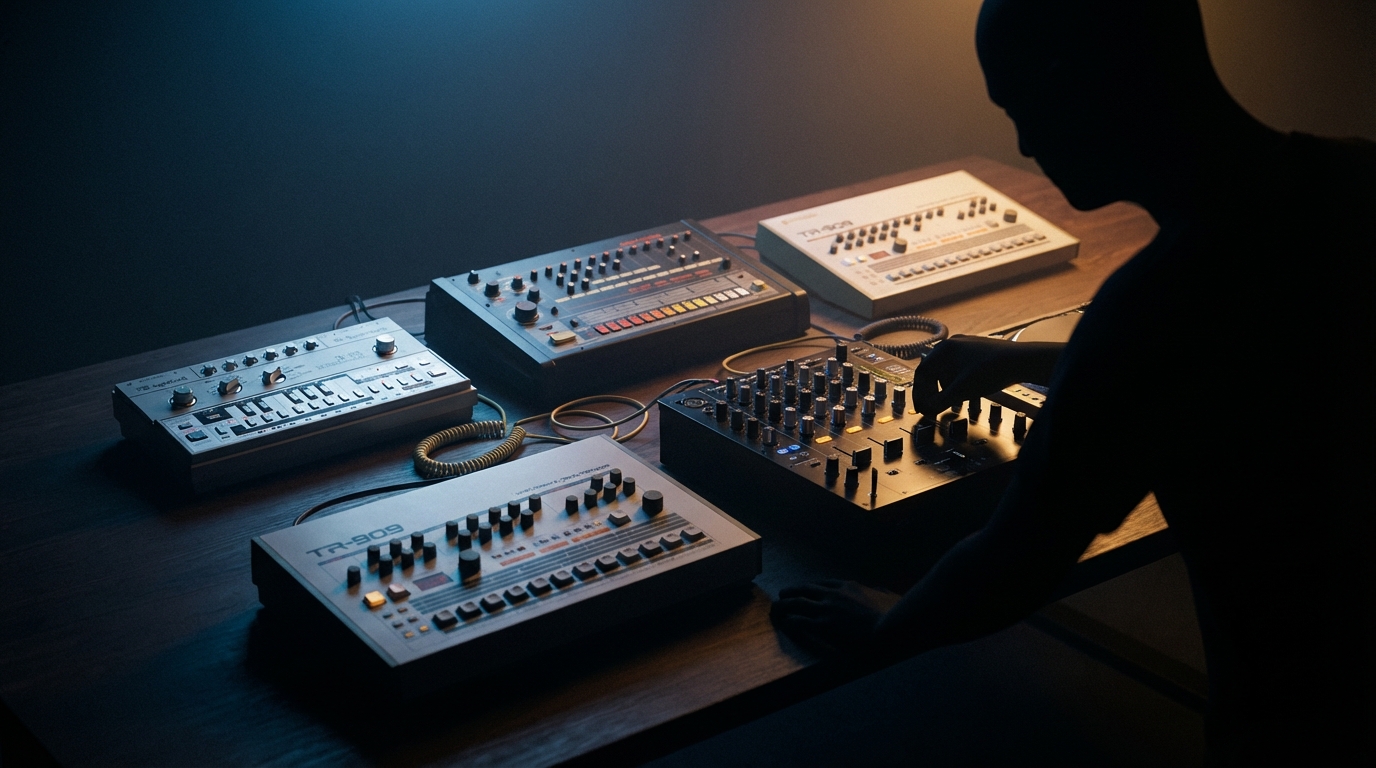
Richie Hawtin’s early rigs read like a hardware manifesto. Because he worked with Roland TB-303, TR-808 and TR-909 machines, he helped define acid techno and minimalism. Moreover, his Plastikman alias pushed these tools past their factory roles. As a result, Hawtin turned simple patterns into living, evolving textures.
He treated the TB-303 as more than a bass synth. He discovered how to bend its filter and sequencer functions to create incredibly expressive acid basslines. Therefore Hawtin would tweak resonance, accent and slide in real time. For example, he used subtle filter sweeps to make basslines breathe. These techniques became central to acid techno and to the TB-303’s legacy.
Hawtin also leaned on Roland rhythm machines. The TR-808 provided the percussive backbone for many Plastikman tracks. “Spastik” – an 808 Monolith, showcases this approach with relentless percussion and focused dynamics. At the same time, the TR-909’s integrated sequencer enabled early hardware synchronization and tighter groove control. Because of this, Hawtin could lock drum hits to analog basslines while keeping live variation.
Beyond the 303, 808 and 909, he used compact synths like the SH-101 and MC-202. These units added melodic and arpeggiated layers that complemented the acid lines. “Sheet One” is Plastikman’s early minimal techno masterpiece, and it highlights that spare, surgical aesthetic. Moreover, Hawtin’s early DE9-era live sets proved that minimal hardware could deliver dramatic, club-ready performances.
Today those innovations still inform hybrid DJing and modular workflows. Therefore modern producers and DJs study his mappings, his live tweaks, and his focus on clarity. For context on the original hardware makers, see Roland. For how software hosts evolved alongside this hardware ethos, visit Ableton.
| Gear name | Function | Notable use in Plastikman sets | Distinctive features and related keywords |
|---|---|---|---|
| TB-303 | Monophonic bass synthesizer with a built-in sequencer. | Created expressive acid basslines on early Plastikman tracks like Sheet One. | Resonant filter, slide and accent. Hawtin ‘bent’ the filter and sequencer to shape acid lines. Related: TB-303, acid techno |
| TR-808 | Analog drum machine focused on low end and percussive color. | Provided the percussive backbone on Spastik and other Plastikman pieces. | Deep punchy kick, warm snares and long decay. Favored for 808 percussion textures |
| TR-909 | Hybrid drum machine with analog circuits and digital control plus sequencer. | Used for tighter groove control and hardware synchronization. | Punchy kick and crisp hats. Integrated sequencer enabled locking tempo and MIDI sync. Related: TR-909, groove control |
| SH-101 | Compact monophonic analog synth for leads and bass. | Added melodic and arpeggiated layers to minimal Plastikman arrangements. | Simple modulation, hands-on knobs, battery-powered portability. Related: SH-101 |
| MC-202 | Monophonic synthesizer with step sequencer for bass and lines. | Supplied arpeggiated patterns and additional bass voices in live rigs. | Compact sequencer, sync inputs, raw analog character. Related: MC-202 |
| DE9 series | Performance-focused controllers and hardware interfaces Hawtin used live. | Served as part of DE9-era sets for mapping and live remixing. | Optimized for live mapping and tight integration with DJ software and hardware. Related: DE9, live mapping |
Modern Richie Hawtin Plastikman Gear Setup and Hybrid DJing
In recent years, Richie Hawtin has evolved his Plastikman gear into an innovative hybrid setup that seamlessly integrates traditional hardware with cutting-edge software. By combining modular systems, drum machines, and powerful software like Ableton Live and Traktor Pro 4, Hawtin crafts dynamic performances characterized by real-time remixing and live synthesis.
A focal point of Hawtin’s setup is the PLAYdifferently Model 1 and 1.4 DJ mixers, which he helped develop. These mixers stand out for their emphasis on sound shaping and pristine analog paths. As described in MusicTech, the Model 1 operates differently from other mixers, putting control, clarity, and creativity at the forefront here. The Model 1.4, similarly praised, offers an expanded format ideal for artists who value an intuitive user interface and sound clarity here.
Hawtin treats DJing as a “real-time remix,” utilizing individually mapped controllers to orchestrate elements of his sets. This approach allows him to manipulate audio sourced from both digital tracks and hardware devices into cohesive, evolving compositions that reflect the spontaneity of live performance. The integration of Traktor adds another layer, allowing him to precisely match and transition between tracks seamlessly here.
His method has redefined DJ performance standards, maintaining that producers and the ideas they bring should take center stage over DJ hype. This guiding principle drives Hawtin to fuse traditional and modern elements in his craft, resulting in sets that simultaneously honor techno’s roots while embracing future possibilities.
For an in-depth perspective on how Richie Hawtin’s work influences modern DJing and music production, explore the technical nuances of Ableton Live on Ableton’s website, or delve into the hardware options on Roland’s site.
CONCLUSION
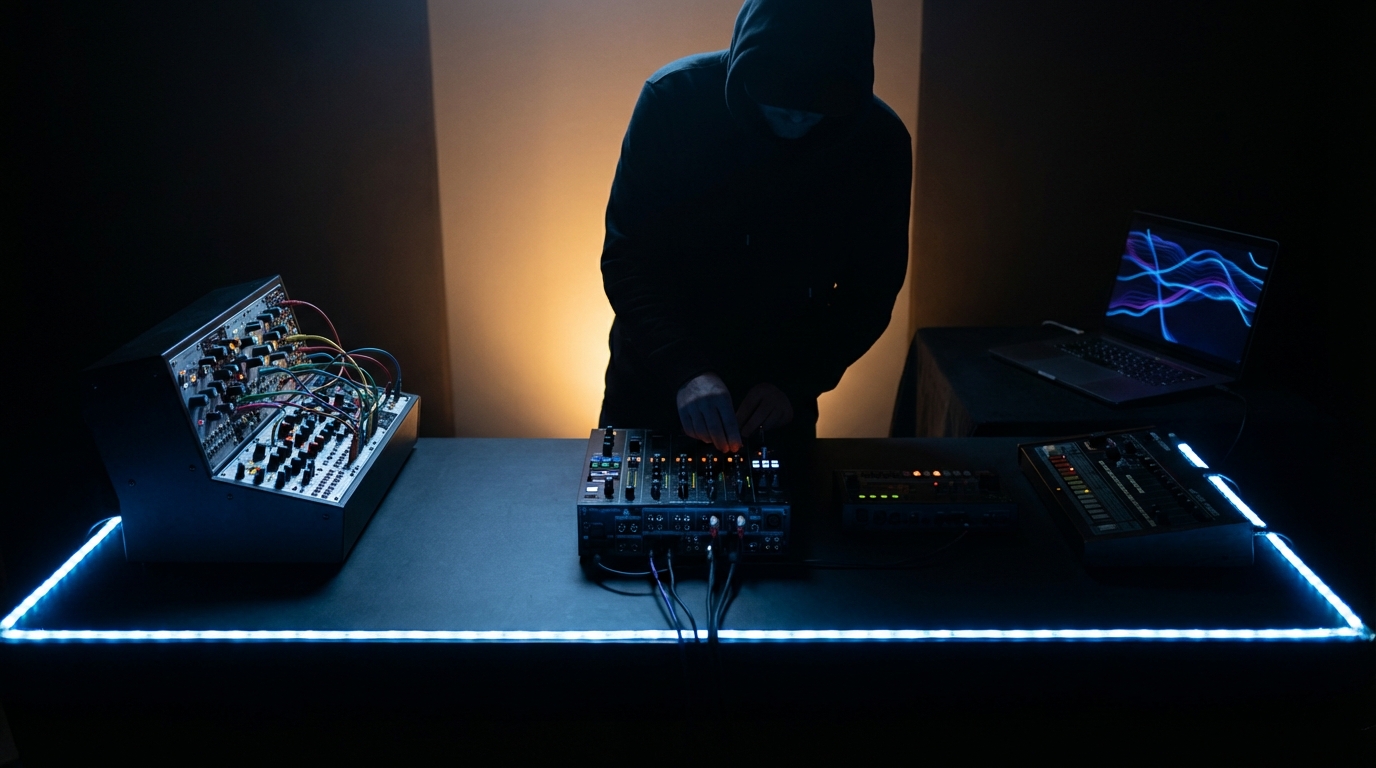
Richie Hawtin Plastikman gear shows a clear arc from vintage Roland machines to modern hybrid rigs. Because he pushed TB-303, TR-808 and TR-909 beyond their factory roles, he reshaped acid techno textures. Moreover he layered SH-101, MC-202 and modular systems to expand minimal soundscapes. Today his use of DE9 hardware, PLAYdifferently Model 1 mixers, Ableton Live and Traktor Pro 4 informs hybrid DJing.
Hawtin treats DJing as a live remix, and therefore he prioritizes ideas over ego. He favors clarity and control, not effects-driven flash. As a result producers and builders adopted his standards for signal path and sound shaping. Consequently the PLAYdifferently Model 1 and Model 1.4 set a benchmark for tone.
Taken together these choices set measurable benchmarks in performance and production. Therefore modern techno owes much to his gear-led philosophy. Collectors, producers and live performers still study his mappings and live tweaks. Richie Hawtin Plastikman gear remains a living template for anyone seeking sonic precision.
