


How Hawtin Turned the TB-303 into Emotion
Richie Hawtin Plastikman TB-303 minimal techno explained: how the TB-303 inspired expressive acid lines and redefined minimal techno.
Richie Hawtin Plastikman TB-303 minimal techno
Richie Hawtin Plastikman TB-303 minimal techno changed how producers think about sound. He used the TB-303 to sculpt acid basslines that felt alive and dynamic. Because he bent the filter and sequencer, the instrument found an expressive voice. His Plastikman project framed minimal techno as emotional, sparse, and meticulously detailed. This introduction speaks directly to DJs, producers, and studio engineers.
Hawtin treated gear as a creative partner in both studio and stage. He paired Roland units like the TR-909 and SH-101 with modular synths for texture and timing. As a result, his live performances blurred DJing and live synthesis. Producers learned to extract melody, movement, and atmosphere from limited hardware. Therefore, Plastikman tracks range from hypnotic to melancholic to futurist.
This article dives into the machines, techniques, and decisions that shaped that sound. Also, it examines the TB-303’s filter tricks, sequencing habits, and programming tips. Moreover, it highlights Hawtin’s later innovations, including PLAYdifferently and hybrid digital workflows. Read on for practical gear insights, historical context, and sound design tips inspired by a true, lasting pioneer.
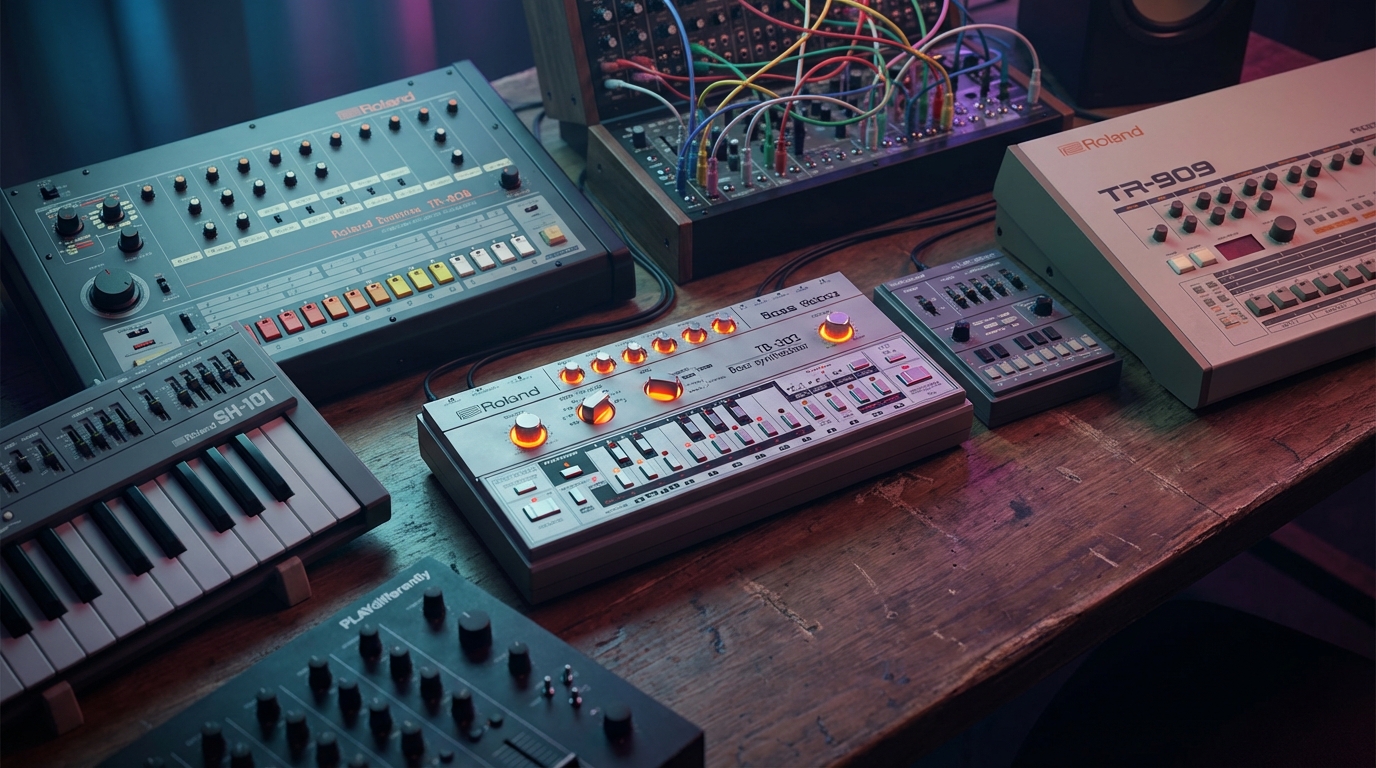
Roland TB-303 and the heart of Richie Hawtin Plastikman TB-303 minimal techno
The Roland TB-303 transformed Plastikman sound from pattern into personality. Originally a commercial failure, the TB-303 found a second life when producers repurposed its sequencer and filter. Richie Hawtin used those quirks to build acid basslines that sounded alive. As a result, Plastikman tracks gained emotional depth, hypnosis, and a minimal edge.
Why the TB-303 mattered
- It was rejected then reclaimed. The TB-303 flopped on release, but its unusual filter and sequencer proved ideal for experimental electronic music. For context on the 303’s cultural rise, see Roland’s account of Acid Tracks and the instrument’s legacy: View Docs.
- Hawtin bent the instrument. He pushed cutoff, resonance, accent, and slide while the sequencer ran. This produced fluid, expressive acid lines instead of static bass notes.
- It became a sound characterizer. Producers called it “more than just an instrument – it’s a sound characterizer.” Hawtin exploited that character to make lines feel human and fragile.
How Hawtin used the TB-303 technically
- Filter modulation and resonance. He dialed resonance high and automated cutoff movement to create squelch and vocal-like timbre. This gave lines emotional contour.
- Sequencer tricks. He used strategic accents and slides to imply legato phrasing. Also, varying pattern length and rests added tension.
- Signal processing. Hawtin layered distortion, delay, and subtle chorus. Therefore, the 303 sat in a live mix and cut through club systems without overpowering other elements.
- Integration with drums and modular. He clocked TB-303 patterns to TR-808 and TR-909 grooves for tight sync. Later, he patched 303 outputs through modular filters for extra texture.
Legacy and lessons for producers
The TB-303 shaped Plastikman minimal techno by forcing restraint and focus. Because the instrument offered limited controls, Hawtin learned to sculpt nuance. Consequently, producers today still study these methods to create hypnotic, emotive, and minimal techno lines. For a visual history of the TB-303’s influence, watch this short documentary: View Video.
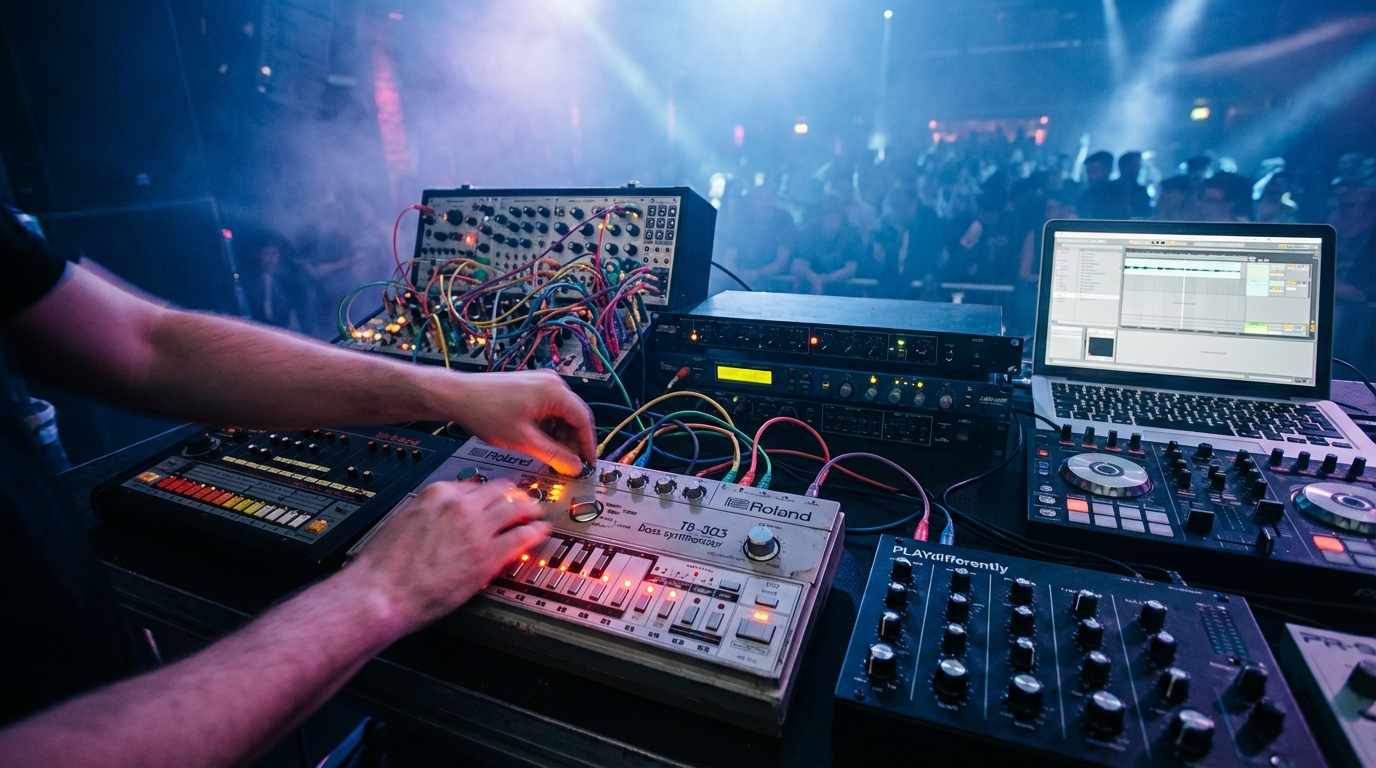
Richie Hawtin Plastikman TB-303 minimal techno and his impact on DJ technology and performance
Richie Hawtin moved beyond Plastikman to reshape how DJs use technology. He embraced digital tools early and mixed them with analog gear. As a result, his work bridged studio practice and live performance. This section explores his influence on Traktor adoption, hybrid DJing, and hardware innovation.
Early digital adoption and hybrid DJing
- Hawtin adopted Traktor and similar platforms before many peers. Therefore he showed that digital tools could enhance creativity rather than replace it. For information on Traktor and its role in DJ workflows visit this page.
- He pioneered hybrid sets that combined timecoded vinyl, laptops, and hardware. Consequently, his performances felt both precise and spontaneous.
- He treated software as an instrument. Because of this view, he integrated effects, loops, and live synthesis into DJ sets.
PLAYdifferently Model 1 and sound first philosophy
- Hawtin co-designed the PLAYdifferently Model 1 to focus on sound shaping over showmanship. Visit the official Model 1 page for specs and features: this page.
- The mixer emphasizes signal integrity, per-channel filters, and creative routing. As a result, it rewards careful listening and subtle manipulation.
- Hawtin pushed the industry to value audio fidelity. Moreover, he encouraged DJs to prioritize musical ideas over ego.
A closed system: studio, live, and technology
Hawtin’s workflow creates a closed system. He translates studio techniques into live patches and back again. Therefore his sets feel like extensions of studio sessions. This loop influenced producers and performers worldwide. For an interview on his tech-driven approach see this interview.
Legacy and practical takeaways
- Prioritize sound quality and thoughtful routing.
- Mix software and hardware to expand expression.
- Design tools that serve the music, not the performer.
Richie Hawtin’s blend of innovation, restraint, and technical craft guides modern electronic music. As a result, artists now see technology as a creative partner, not just a tool.
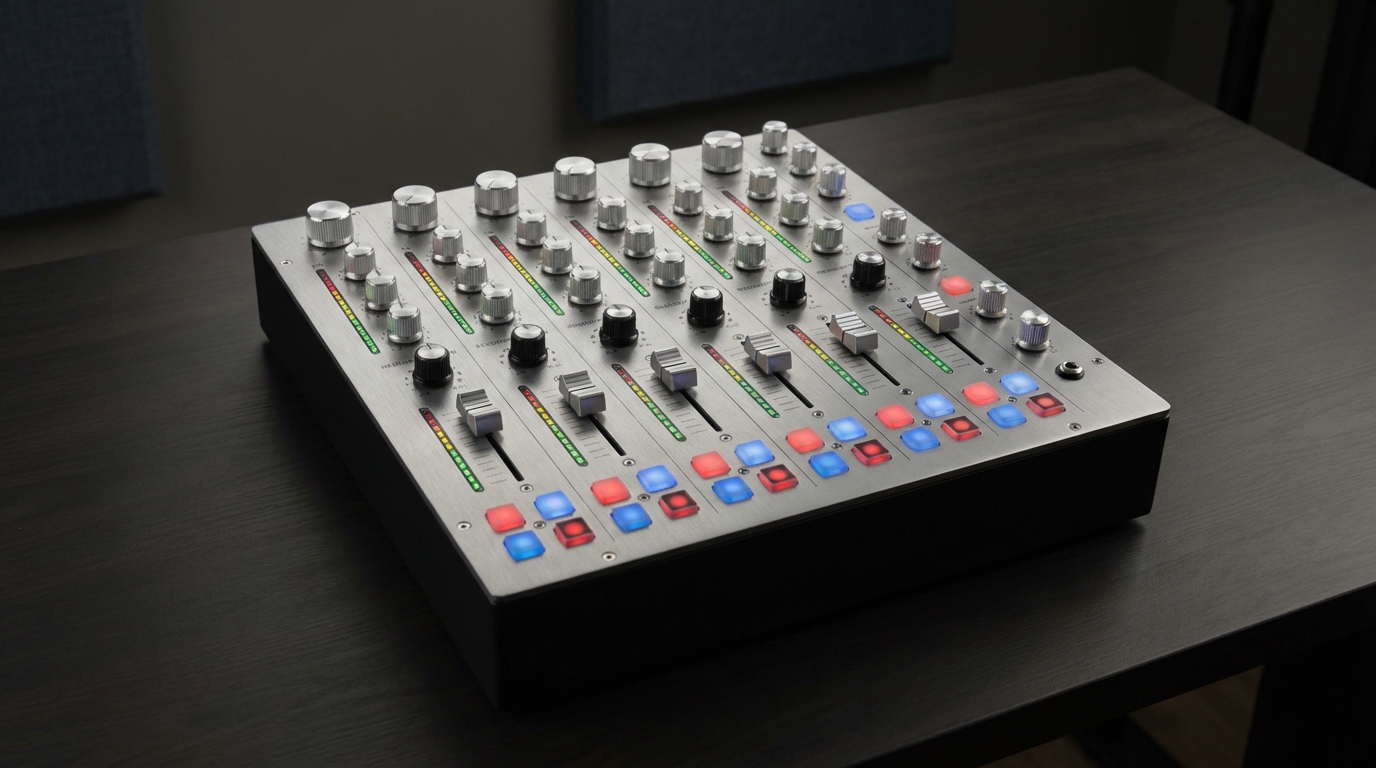
PLAYdifferently Model 1 mixer emphasizes sound shaping over spectacle
Conclusion
Richie Hawtin reshaped minimal techno and live electronic performance. He treated machines as creative partners, not mere tools. Because he pushed hardware limits, he unlocked new expressive potential in club music.
The TB-303 sits at the center of that revolution. Hawtin bent its filter and sequencer to make acid lines that breathe and move. Therefore the instrument became more than a voice; it became a character within his tracks.
Beyond Plastikman, he changed DJ technology and how performers approach sets. He adopted Traktor and hybrid workflows early and co-designed the PLAYdifferently Model 1 to prioritize sound shaping. As a result, modern DJs value fidelity, subtlety, and musical ideas over spectacle.
His closed system of studio methods, live rigs, and custom tools continues to inspire producers worldwide. Also his example reminds creators to choose ideas over ego and craft over trend. Forever influential. Richie Hawtin Plastikman TB-303 minimal techno.
